
The Right Parts Washer for the Job:
A Guide to Workshop Cleaning Equipment
In any skilled trade, using the wrong tool is a recipe for frustration, wasted time, and poor results. Using a hammer to turn a screw is not just inefficient; it's the wrong approach to the problem.
The same principle applies to an industrial workshop. When it comes to cleaning, not all contamination is the same. A gearbox housing coated in oil and grease requires a completely different solution to a cylinder head or engine block with baked carbon, thick paint, and complex internal galleries.
It is quite common for space constraints to restrict a workshop to just one cleaning machine. While this 'one-size-fits-all' approach saves valuable floor space, it often means compromising on the speed and effectiveness of the cleaning. Ultimately, relying on a single method is rarely the best utilisation of time when dealing with heavy or complex contamination.
This approach creates a critical bottleneck in the workflow. Using a heavy-duty hot tank to clean a simple, oily component is not the best use of the hot tank as a resource. Conversely, trying to clean a complex engine block in a simple spray wash will not provide the best results. A simple spray cannot contact the internal contamination, which inevitably results in more manual cleaning down the line. All chemical cleaning relies on Time, Action, Concentration, and Temperature (TACT); without that chemical contact time, there is simply no chemical cleaning action.
Having the right tool for the job is essential. The key to workshop efficiency is matching the equipment and method to the part and its specific contamination.
Here is a quick guide to the three main types of cleaning equipment and what they are designed for.
1
The Solvent Sink:
For Fast, On-the-Spot Cleaning
The solvent sink is a classic staple, found in the corner of almost every workshop. It typically consists of a basin that holds a reservoir of solvent (hydrocarbon) and a simple pump that delivers that solvent through a brush, allowing a technician to clean parts manually.
When to Use It: The solvent sink is a manual tool. Its value is in its immediacy. It is designed for fast, on-the-spot cleaning and inspection, particularly where a deep, automated clean is not required.A quick degrease of a component to perform an inspection.
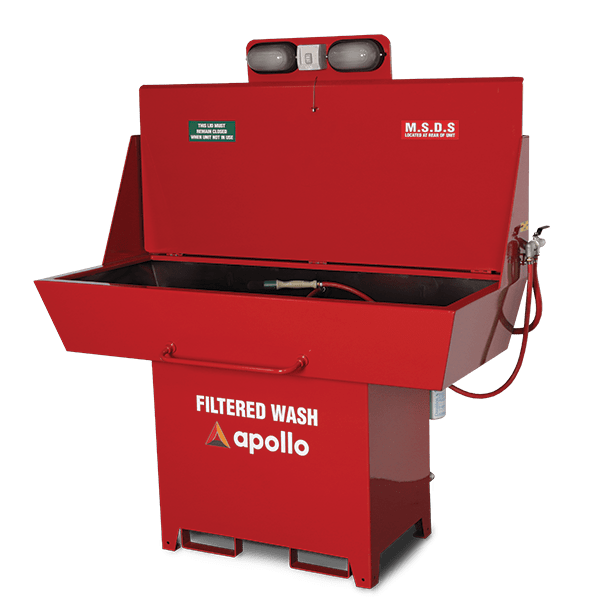
Best For: This is the go-to tool for a technician in the middle of a job.
It is perfect for:
- A quick degrease of a component to perform an inspection.
- A final-pass clean of internal engine or gearbox parts right before the final assembly. For this critical, contamination-sensitive process, Apollo supplies fully filtered solvent sinks to ensure fluid cleanliness.
- Nuts, bolts, and brackets that need a quick clean before reassembly.
The Limitation: The solvent sink is a “one-to-one” process: one technician, one part, one brush. It is an active, manual task that directly consumes a skilled technician’s time. As we’ve discussed in previous articles, this makes it completely unsuitable for “bulk cleaning.” Furthermore, traditional hydrocarbon-based solvents are increasingly being phased out due to the serious health and safety risks they pose (potentially carcinogenic, skin irritation, and flammability). For a safer alternative Apollo has developed the modern solution to old manual parts washers.
The Modern Alternative:
The EziBlast
Additionally, for workshops wanting to move away from harsh solvents, Apollo has designed and built the EziBlast. This machine provides the convenience of a manual parts washer but uses a safer, aqueous-based (water-based) detergent, offering a modern, effective, and enclosed alternative.
Verdict: An essential tool for “quick precision cleaning” of parts throughout a repair, when automation or bulk cleaning solution are not required.”
2
The Spray Washer:
For Fast, High-Impact Cleaning
The automated spray washer is the workhorse of the modern workshop. It’s an enclosed cabinet where parts are placed on a turntable. When the lid is closed, a high-volume pump blasts hot, water-based detergent at the components from all angles, stripping away contamination.
When to Use It: to automate the degreasing process, when a fast, high-impact wash is needed for components primarily contaminated with oil and grease.
Best For: The spray washer is a “line-of-sight” cleaning solution. While its high-pressure spray is powerful, it can only clean what it can physically hit. This makes it the perfect tool for:
- External surfaces of engine blocks, transmissions, and gearbox housings.
- Simpler, non-complex components like truck hubs, axle parts, final drives, and diff housings.
- Any part where the main goal is to remove external grease and oil quickly.
The Apollo Advantage: A Safer, More Powerful Design
A critical difference in spray washers is the turntable design. Basic machines on the market typically use one of two systems: a simple “direct gear drive” or a “water-driven” system. Both of these common designs pose separate safety and performance issues.
- The ‘Water-Driven’ Flaw: This design uses the pump’s own spray pressure to spin the turntable. This is highly inefficient as it robs the spray jets of valuable power, and it’s unsafe as the turntable can “over-speed” and continue to spin dangerously, posing a significant hazard to the operator when the lid is opened.
- The ‘Basic Gear-Drive’ Flaw: This system solves the over-speed problem but introduces a new, significant hazard. These simple drives are rigid and will not slip. If a part falls and becomes lodged between the turntable and the spray bar, the motor will continue to turn, causing catastrophic damage to the part, the machine, or both.
An Apollo Spray Washer is engineered to solve both of these problems. We use a gear-drive system, but with a critical safety feature: a built-in safety clutch. This “smart” design is the key to its superior performance:
- Superior Safety (AS4024 Compliant): The gear drive is safe, controlled, and stops when the lid is open, eliminating the over-speed risk. Crucially, the safety clutch is designed to slip if a part becomes lodged, protecting the operator, the machine, and the components from damage.
- 100% Power to Cleaning: Because it is gear-driven, the entire volume of the pump is directed to the spray bars. Our engineered jet design is superior to the common drilled holes found in basic machines; our system directs a high-impact, high-volume stream of chemical at the parts for a faster, more effective clean.
Verdict: The ideal automated solution for the majority of general workshop degreasing, where the contamination is external grease and oil. Think quick, easy degreasing think Apollo Spray Washer!
3
The Hot Tank:
For Heavy-Duty, Total Immersion Cleaning
The hot tank (or immersion cleaner) is the heavy-duty specialist. It is a large, heated tank where parts are fully submerged in a hot, agitated chemical solution. This is a fundamentally different process from a spray washer.
When to Use It: This process is required when a component needs a deep, complex internal clean. For parts with tough, baked-on carbon, paint, or heavy contamination, there is no better cleaning method than total immersion and agitation in a hot chemical solution.
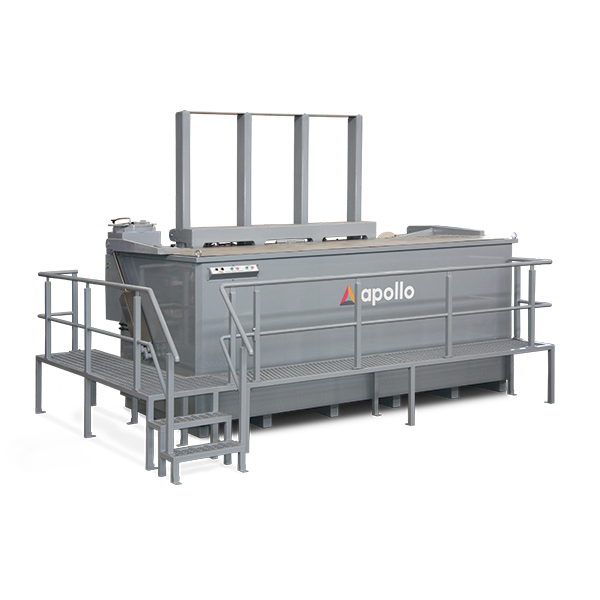
- Complex Components: Engine blocks, cylinder heads, and manifolds.
- Internal Contamination: Its main advantage is its ability to clean the inside and outside of parts simultaneously—reaching deep into intricate oil galleries, coolant jackets, and bolt holes to break through heavy contamination.
- Heavy Contamination: It is designed to chemically strip baked-on carbon, stubborn paint, heavy grease, and even surface rust.
- Specialised Parts: EGR coolers, and heat exchangers.
- Wide Application Range: The hot tank is not limited to just engine parts. Its heavy-duty immersion process is perfect for a wide variety of applications, from commercial kitchen filters to the largest heavy industrial components.
The Apollo Advantage: The Self-Cleaning Tank The biggest problem with traditional hot tanks/ultrasonics is the tank itself. Over time, all the contamination removed from the parts settles at the bottom, creating a thick, sludge. This sludge creates multiple problems:
- It wastes energy, as the heating elements must heat the sludge.
- It reduces the performance.
- It consumes valuable chemicals, which try to “clean” the sludge instead of the parts.
- It can coat clean parts as the sludge builds up.
- It forces a complete, multi-day shutdown for a costly clean-out, often requiring staff to manually scrape the sludge from the bottom of the tank.
The Apollo Hot Tank is engineered to solve this problem with its integrated centrifuge filtration.
How it Works: The centrifuge continuously pulls the dirty solution from the tank, through centrifugal force it separate the solid sludge, and returns the clean, chemical back into the tank.
The Benefit: The tank “cleans itself” while it works. This eliminates the need for manual desludging, saving thousands of dollars in downtime, labour, new fresh start up chemical and waste disposal. It also keeps the chemical in its most effective state, extending its life by 8+ years and delivering a faster, more consistent clean every time.
Verdict: The essential tool for all heavy-duty engine and component rebuilding, where a 100% internal and external clean is non-negotiable.
The Thermal Mass Advantage: Heat Transfer and Speed
In chemical cleaning, temperature dictates speed. A fundamental rule of chemistry is that every 10°C increase in temperature effectively doubles the speed of the cleaning reaction. If you require robust, heavy-duty cleaning, you need a system that can sustain extreme heat. The Apollo hot tank is the only system on the market designed to reliably operate at 90°C and above, maximising this chemical efficiency.
But generating heat is only half the equation; transferring it to the component is where the hot tank completely outclasses a spray washer. It all comes down to thermal mass.
Imagine putting a 2-tonne cold iron engine block into a spray washer. When 80°C water sprays onto that large block of cold steel, the water loses its heat immediately upon impact. It takes a significant amount of time just to warm the metal enough for the chemical reaction to even begin.
Now, compare that to lowering the same 2-tonne cold engine block into an Apollo hot tank holding 10,000 litres of solution at 95°C. The sheer thermal mass of that water easily overpowers the cold steel. The tank’s overall temperature is not considerably effected by the component; instead, the iron is rapidly heated to the optimal temperature for the chemicals to work. This instant, sustained heat transfer—combined with total immersion—is what guarantees the ultimate clean.
Matching the Tool to the Task
Matching the equipment to the application is the most important first step to a more efficient workshop. Using the wrong machine costs time, energy, and labour.
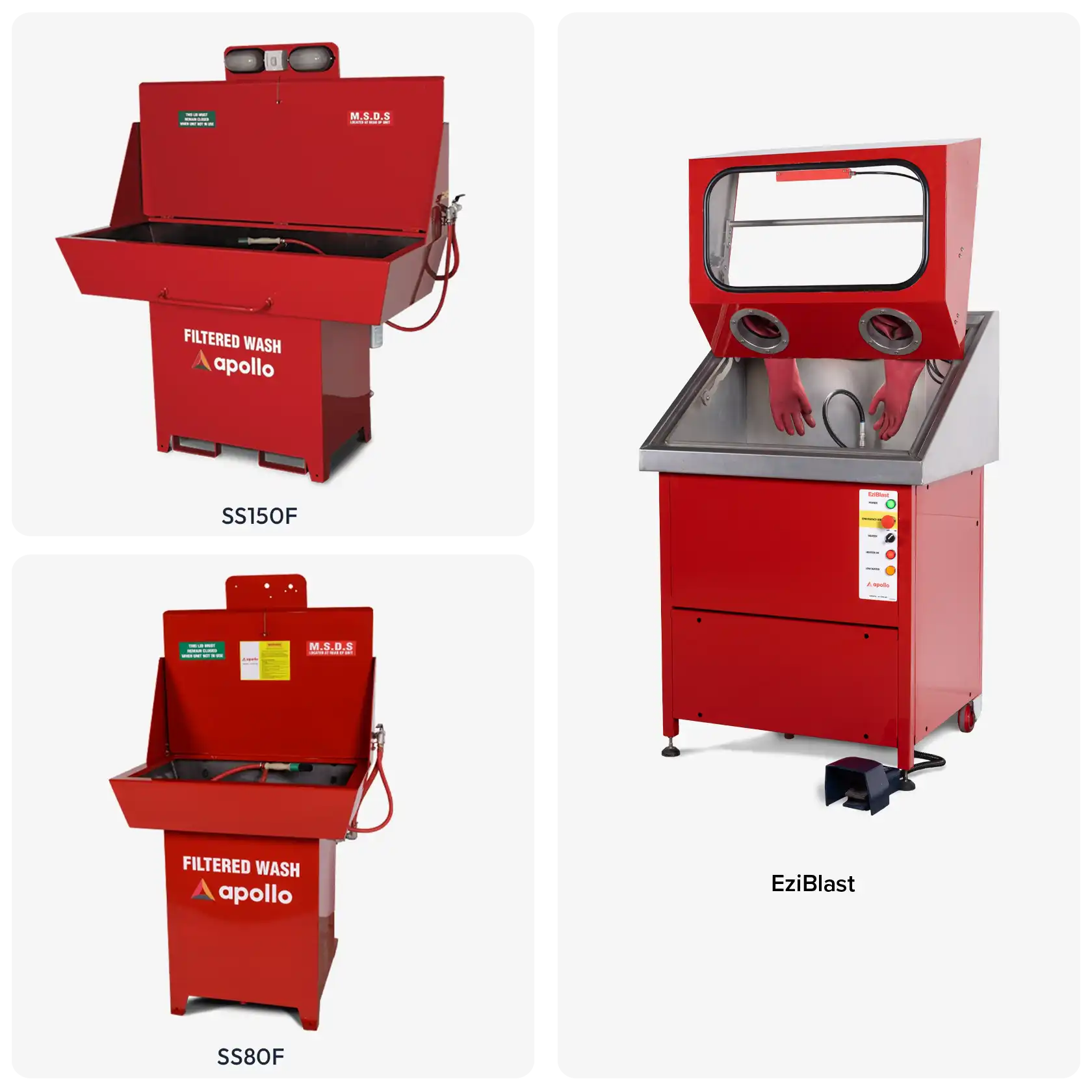
Solvent Sinks and EziBlast
For small, on-the-spot manual tasks.
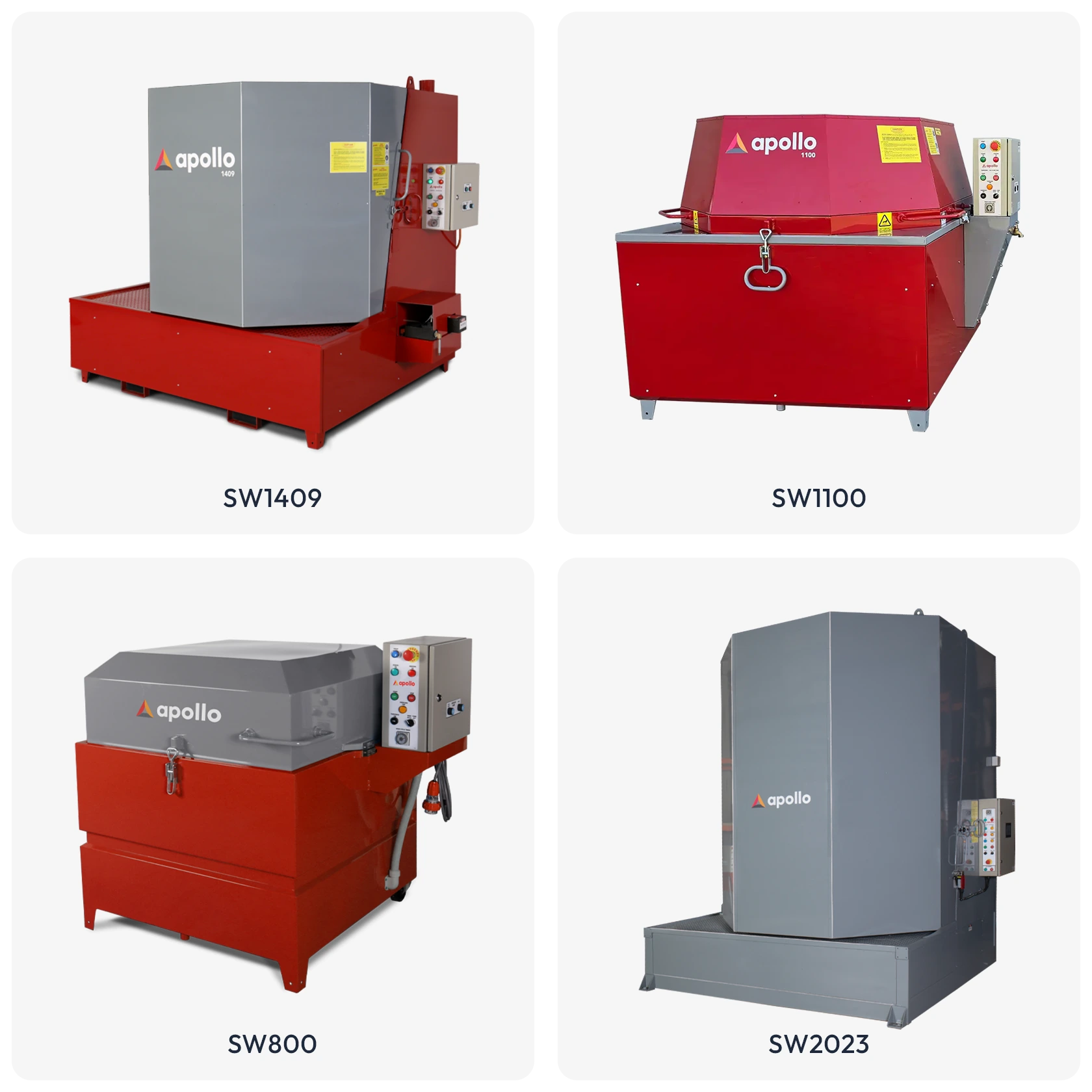
Spray Washer:
For fast, automated cleaning of external oil and grease.
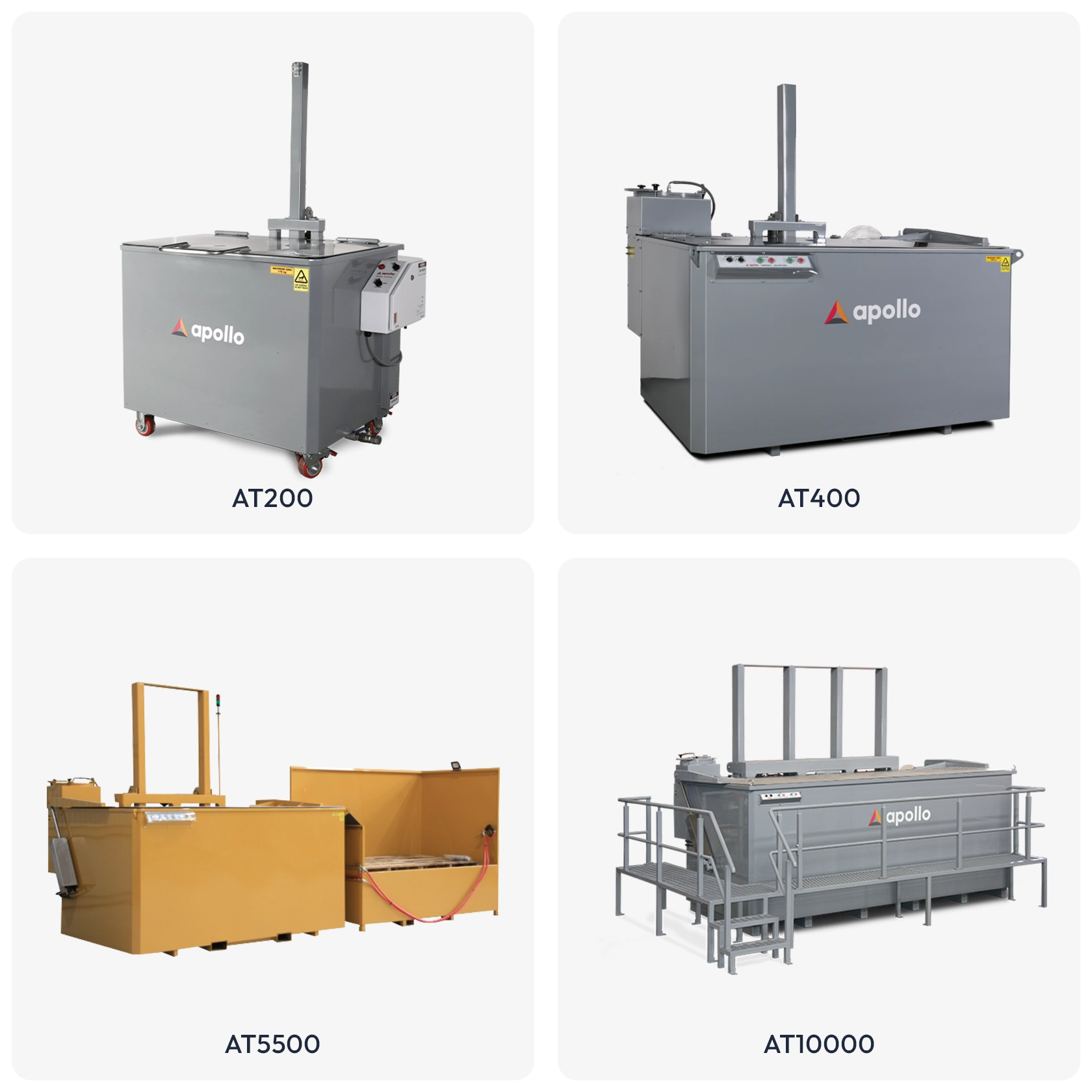
Hot Tank:
For heavy-duty, internal and external deep cleaning of complex parts.
By assessing the part, the contamination, and the desired result, a workshop can build a cleaning process that transforms a productivity bottleneck into a streamlined, safe, and profitable part of the business.
Mastering the TACT Principle
As mentioned earlier, all effective chemical cleaning relies on TACT. The Apollo hot tank is specifically engineered to maximise every single element of this critical formula:
T - Time
The system cleans while your team is off the clock. You can load the machine to work overnight or over the weekend with no one around, making your workshop productive 24/7.
A - Action
The heavy-duty agitating hot tank keeps the solution constantly moving, actively shearing away stubborn contamination, paint and carbon from deep internal galleries and external surfaces.
C - Concentration
Maintaining the correct chemical concentration ensures the wash solution consistently breaks down heavy grease, paint, and baked-on carbon.
T - Temperature
Reliably maintaining temperatures over 90°C guarantees rapid heat transfer and accelerates the chemical reaction for the ultimate clean.